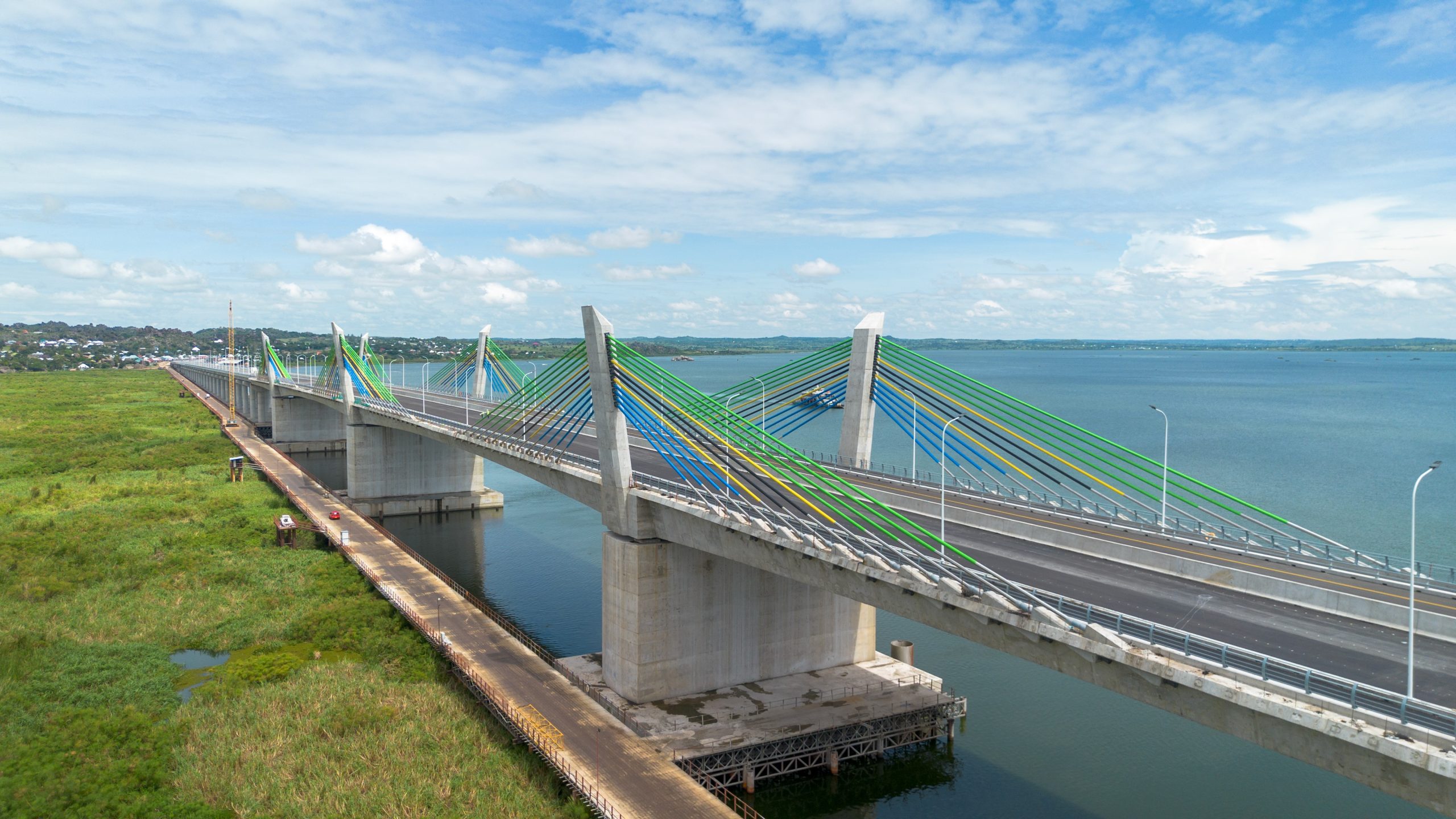
Tanzania today celebrated a historic achievement with the official inauguration of the J.P. Magufuli (Kigongo–Busisi) Bridge, a landmark infrastructure project that stands as the longest in East and Central Africa. Spanning 3 kilometers across Lake Victoria, this engineering marvel is poised to propel Tanzania into a new era of economic growth and regional integration.
The bridge’s strategic location connects the Mwanza and Geita regions, creating a critical link that enhances connectivity across the Lake Zone. It features four lanes, pedestrian walkways, and emergency shoulders, enabling seamless movement for thousands of vehicles daily. Previously, crossing Lake Victoria required a ferry trip of three hours, an obstacle to efficient trade. Today, that journey is cut to just three minutes, transforming transportation dynamics in the region.
The project was initiated in 2020 under the leadership of the late President John Pombe Magufuli, and today, it bears his name in honor of his vision for national development. The construction faced hurdles, notably budgetary constraints heightened by the global COVID-19 pandemic. Nevertheless, under President Samia Suluhu Hassan’s leadership, the government mobilized over TZS 611 billion ($263 million) to complete the project on time. This financial commitment reflects Tanzania’s unwavering commitment to infrastructural modernization and economic resilience.
“The Kigongo–Busisi Bridge is more than just a marvel of engineering; it is a catalyst for regional economic development,” President Samia stated during the inauguration. “It brings us closer as a nation and as a region, opening new avenues for trade, investment, and opportunity.” The bridge’s opening aligns with Tanzania’s broader strategy to transform its economy by improving transport corridors that connect to neighboring countries like Uganda, Rwanda, Burundi, and the Democratic Republic of Congo.
The economic implications are considerable. The bridge is expected to boost fish exports by approximately 12% over the next five years, thanks to faster and more reliable logistics. It will significantly reduce transportation costs, making Tanzanian products more competitive in regional and international markets. Additionally, the improved infrastructure enhances access to mining, agriculture, and tourism regions, fostering more inclusive growth.
Employment was a key component of the project, with over 34,800 Tanzanians employed during construction, including more than 20,000 skilled workers. The project also championed local industry development, supporting nine subcontractors and 16 local manufacturers. Crucially, the project incorporated skills transfer initiatives, including specialized training programs for welders, engineers, carpenters, and safety personnel, ensuring sustainable capacity building for Tanzania’s future projects.
Constructed to meet rigorous international safety and environmental standards, the bridge features dual carriageways, pedestrian paths, emergency lanes, and a central span spanning 520 meters. Environmental safeguards were strictly implemented to preserve Lake Victoria’s ecosystem, demonstrating Tanzania’s commitment to sustainable development.
The inauguration of the bridge is also part of an expansive infrastructure framework. It complements other major projects such as the Julius Nyerere Hydroelectric Power Project, the Tanzania Liquefied Natural Gas (LNG) project, the Standard Gauge Railway (SGR), and the modernization of Ports and Airports—creating a comprehensive network to power economic diversification.
Hon. Abdallah Ulega, Minister of Works, highlighted the strategic significance of the infrastructure, noting, “This bridge is a vital infrastructural pillar that will unshackle regional trade and promote regional integration, fueling Tanzania’s economic ambitions.”
More than just a physical crossing, the J.P. Magufuli Bridge embodies Tanzania’s resilience, ingenuity, and aspirations for a unified, prosperous future. As Julius Nyerere once said, “We don’t just build bridges; we build opportunity, unity, and a better future for our people.”
The Kigongo–Busisi Bridge is a testament to Tanzania’s long-term vision of economic independence, regional leadership, and sustainable development, setting the stage for decades of growth ahead.
Leave a Reply